View Full Transcript
Episode Transcript
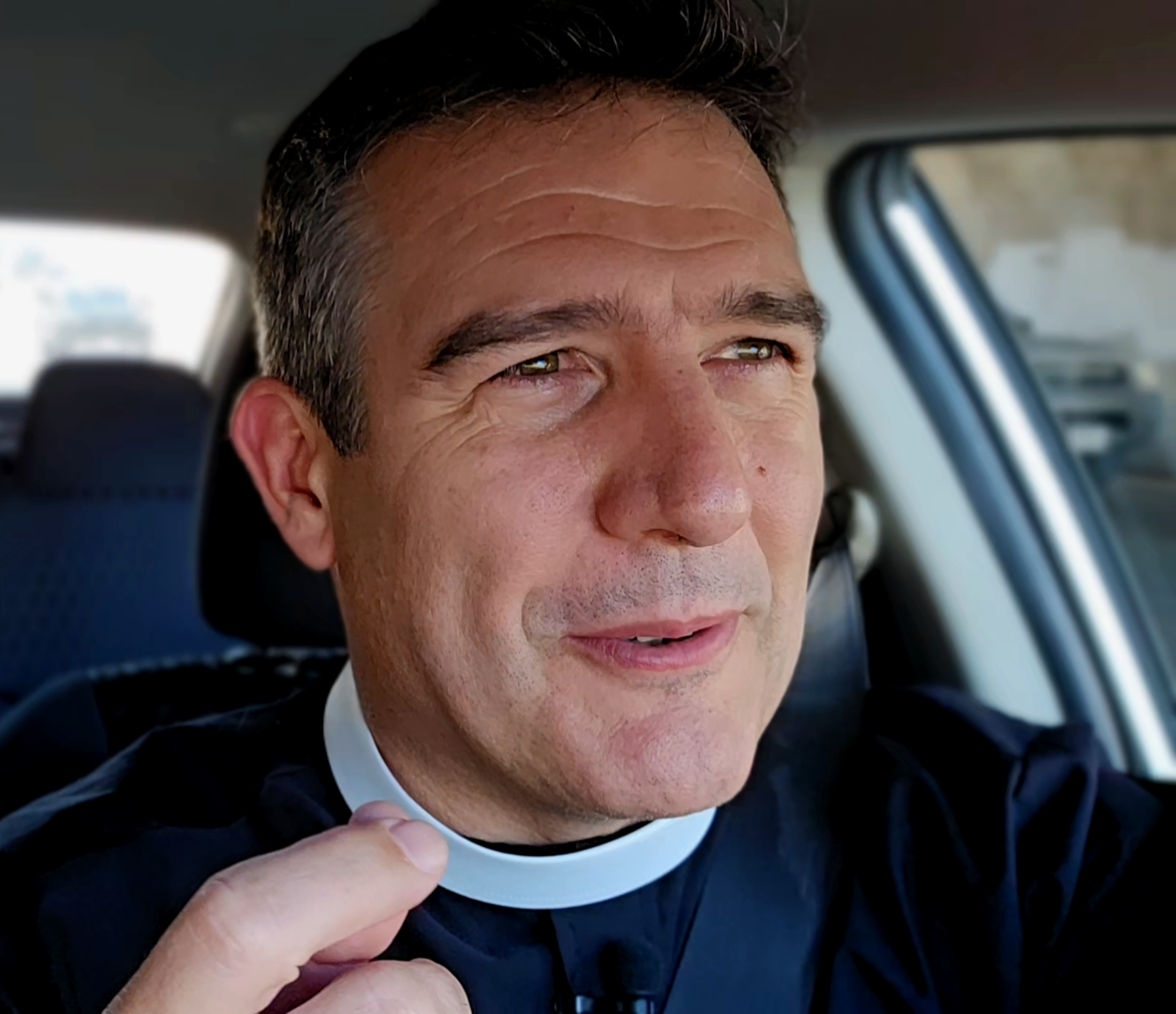
[00:00:00] Good morning, St. Paul Lutheran Church. It's February 15, 2026. Queen Quagasima. 50 days to Easter. Ish.
[00:00:08] This is our last Sunday before we dig into Lent. Ash Wednesday is this Wednesday. It's the Sunday of blind Bartimaeus.
[00:00:17] It's the Sunday of the Lord's prediction of his passion as well. There's a lot going on this week. Let's get into it. We'll start with the colic for the day.
[00:00:26] O Lord, mercifully hear our prayers. And having set us free from the bonds of our sin, deliver us from every evil through Jesus Christ, your Son, our Lord, who lives and reigns with you in the Holy Spirit, one God, now and forever. Amen.
[00:00:44] If you want to underline something from your bulletin when you're praying before the service, that's a great one. He frees us from the bonds of our sin. Remember, the devil is always tempting us to think that sin sets us free.
[00:00:56] When you do what you want, when you sin, you're free. But we know from the Bible that sin is bondage.
[00:01:03] That came up this morning in Second Peter.
[00:01:07] I was thinking of underlining this verse.
[00:01:10] I wonder if I did. Second Peter, chapter two, verse. Well, starting with verse 18. It says when they speak great swelling words of emptiness, they allure through the lust of the flesh, through lewdness.
[00:01:23] The ones who have actually escaped from those who live in error, while they promise them liberty, they themselves are slaves of corruption. For by whom a person is overcome, by him also is he brought into bondage. So that's how the devil does it. He promises liberty and brings us into corruption.
[00:01:43] That's in that prayer. That's beautiful. Okay. Well, the Scriptures are also wonderful today. The first is our entrance, Psalm 89, which is a long Psalm. I'm looking here, 52 verses. We're right in the heart of it. In the middle of it, verses 18 to 29. This is one of those places where the hymns of the church pick up on this theme from 2nd Samuel 7.
[00:02:10] Remember, we've talked about that quite a bit, and it seems like it's come up quite a bit lately that in Second Samuel, chapter chapter seven, David says, I'm going to build a temple. And the Lord says, no, you're not. And he.
[00:02:23] And he says, I'm going to build you a house. You're not supposed to build. I didn't ask you for a house. You're not going to build me a house. I'm going to build you a house.
[00:02:30] And that theme, that the Messiah will be the Son of David and his son will sit on the throne is one of the things that's going to be reflected in all of the Psalms that come later, including verse 20 of this one.
[00:02:42] It says, I have found David my servant. With my most holy oil I have anointed him.
[00:02:48] This is not a psalm of David. This is a psalm of Ethan, the Ezrahite.
[00:02:54] But it's a reflection of that Davidic promise that the Lord gives that you will not lack a son to sit on your throne.
[00:03:04] But already we see that that son who sits on the throne of David is going to be someone special. It says his My hand shall that my hand shall be established with him.
[00:03:16] My arm also shall strengthen him. My faithfulness and my steadfast love shall be with him. And in my name shall his horn be exalted.
[00:03:26] That horn, remember, is probably not talking about the like a shofar, like the horn that you blow like a trumpet, but rather the.
[00:03:36] The edges of the crown. The altar had a horn that was like the edges of the altar. But a lot of times when it talks about horn in the Bible, it's talking about authority. So the. When you wear a crown, it looks like you're wearing a.
[00:03:48] A horn. He shall cry to me. This is verse 26, and probably the reason why this psalm is our psalm today. Because remember, Bartimaeus in our Gospel lesson says, son of David. He calls Jesus son of David.
[00:04:02] And he's picking up on all these promises that the Messiah will be the son of David. Look at verse 26. Well, don't look if you're driving, but listen. It says, he shall cry to me, you are my father, my God, and the rock of my salvation. And I will make him the firstborn, the highest of the kings of the earth. My steadfast love I will keep for him forever. And my covenant will stand firm for him.
[00:04:29] So that this promise of the Messiah, the anointed one, the Christ being the son of David, who's going to be a king forever.
[00:04:39] That's the thing that's going on there. It's beautiful.
[00:04:42] The Old Testament, speaking of King David, is the anointing of King David by Samuel the first time. This is this Beautiful Bible story. 1 Samuel 16 verses 1 to 13.
[00:04:54] The date is wrong. In the bulletin written by the prophet Samuel. Samuel had to die.
[00:04:59] Let's see. David was king in 1010, but that was when he took the office. He was anointed before that. That's when Samuel died.
[00:05:07] Samuel becomes king at 1050.
[00:05:10] Samuel must.
[00:05:12] Saul came king at 1050. So Samuel must have died in like, I don't know, 10, 15 or something like that. Remember, he, Saul at the end summons up Samuel's ghost before he ends up dying in despair, all that stuff. So the date is wrong in the bulletin. Sorry about that.
[00:05:28] But Samuel is giving this account of when the Lord sent him to anoint one of Jesse's sons, Jesse, the Bethlehemite descendant of Judah, to be king. Remember, Saul was.
[00:05:42] Oh, I should know this. What tribe was Saul from? Oh, I've had a start and stop a lot here. Benjamin, Saul was from. Benjamin, David was from Judah. And remember, Saul was a foot taller than everybody else. A huge, big soldier looking guy. But his, his kingly time is just getting worse and worse. And so the Lord says, all right.
[00:06:06] In fact, he starts the passage. The Lord says to Samuel, how long will you grieve over Saul? Since I've rejected him from being king over Israel. Bring your horn with oil and go.
[00:06:16] I'll send you to Jesse, the Bethlehemite I've provided for myself, a king among his sons.
[00:06:22] So the Lord says to Saul, all right.
[00:06:25] The Lord says to Samuel, forget about Saul, we got another plan. Go find Jesse. So he goes, and remember, oh, this is maybe important, maybe not. Remember, maybe this is new for you. Remember, there's these three major offices in the Old Testament. The prophet and the priest and the king.
[00:06:42] And remember, the king and the priest were the anointed.
[00:06:47] They had oil poured over their head to indicate that they were going into the office of priest or king. The prophet was the one who did the anointing. So that when the Lord says to Samuel, take your oil. He says, I'm going to go and you're going to oil someone. You're going to anoint someone and make them king. So he goes to Bethlehem and he finds Jesse and he says, I've come in peace and I'm going to make a sacrifice.
[00:07:13] And he came and he looked on Eliab and it's going to list the three oldest boys of Jesse, the three David's three older brothers.
[00:07:22] So he sees Eliab, the oldest. And Samuel's reaction to Eliab is, oh, this guy's got to be the. Look how kingly he looks. Look how regal he is. He says, surely the Lord's anointed is before him. But, but the Lord says to Samuel, don't look on his appearance or on the height of his stature, because I've rejected him.
[00:07:41] The Lord sees not as man sees.
[00:07:44] Man looks on the outward appearance, but the Lord looks on the heart.
[00:07:48] Then he calls number two Abinadab made him pass before Samuel. No.
[00:07:54] Then he made Shammah pass by. Nope.
[00:07:57] And he makes four more. Seven oldest boys of Jesse pass by.
[00:08:02] No, no, no, no.
[00:08:06] And then there's no one else. And so Samuel says to Jesse, he says, hold on, what's going on here? Are all your sons here?
[00:08:12] And Jesse says, well, there's one, the youngest, he's watching the sheep.
[00:08:18] And Samuel says to Jesse, send for him. We won't sit down till he comes. And he comes and he brings him in. And look at this description of David. He was ruddy, had beautiful eyes, he was handsome.
[00:08:28] The Lord says, arise, anoint him. This is him, the youngest, the smallest, the one who's watching the sheep. The one who. Jesse. If you ask Jesse which is going to be the king, he said, well, probably this one. If not him, this one, if not him, this one, any of them but David, the last that you expect.
[00:08:48] But the spirit of the Lord rushed upon David from that day forward.
[00:08:52] And Samuel rose up and left. He went to Ramah. So David is chosen as king. Now, he doesn't become king already. A lot of things are going to happen after his anointing as king, including he's going to be playing the harp for Saul and rescuing him from the demons and all this other stuff. So he's anointed as king, but he doesn't take his office for years.
[00:09:13] And there's all these opportunities.
[00:09:17] This time frame between the anointing of David and David taking the office of king is so fascinating to me because there's all these opportunities that look like.
[00:09:30] It looks like David is giving Saul into his hands. I mean, there's these times where, remember David and his men were hiding in the cave, and Saul comes into the cave to go to the bathroom, and David is close enough to cut a piece of the edge of his garment off with his sword, and he doesn't even notice.
[00:09:49] And you would think that the. If you were David, like, oh, the Lord is giving him into my hands. But David doesn't kill that he doesn't lay a hand on the Lord's anointed. It's so amazing.
[00:09:59] Anyhow, this calling of David to be king ends up culminating in this promise that the Messiah would be of David. And remember also, I mean, we mentioned this often enough, but that the previous promise of the Messiah's genealogy was. Was all the way back in Judah in Genesis chapter 50.
[00:10:20] So you go from Genesis chapter 50 knowing that the Messiah is going to be of the tribe of Judah.
[00:10:25] That's got to be 50 in the ex.
[00:10:28] I can't think of. It's 1700 BC 8, maybe.
[00:10:35] Maybe 1600 BC all the way to.
[00:10:39] To 1000 BC.
[00:10:42] You go 600 years, and then there's the. The next genealogical marker that the Lord gives. I mean, before that, it was every generation. Abraham, then Isaac, then Jacob, then Judah, and then nothing until David and then nothing after that. Which is why when Jesus asks on Holy Tuesday to the Pharisees, hey, whose son is the Messiah? They say. They all say David's.
[00:11:07] That's what's going on there. Okay, our epistle is a famous one, 1 Corinthians 13.
[00:11:15] Love is patient. Love is kind.
[00:11:18] Love does not envy or boast. It's not arrogant or rude. This is this discussion of love.
[00:11:23] And we put that in there because it's Valentine's Day.
[00:11:28] It's not the real. That's not the reason. Although. Do you know, I was looking at the story of St. Valentine.
[00:11:33] He was apparently marrying people. The. The story of St. Valentine is that the emperor forbade his soldiers. His. These. The Roman emperor, some pagan Roman emperor, was forbidding his young soldiers from getting married because he thought they'd be better soldiers if they were single.
[00:11:50] And Valentine, this priest, was marrying him secretly.
[00:11:54] And he gets arrested and he writes a letter to someone from prison, and he says, you're Valentine. And that's the tradition. Anyways, who knows if it's true? He is a martyr for all his trouble for preaching marriage. You know, it's dangerous to preach marriage to a pagan world.
[00:12:11] Anyhow, First Corinthians 13 is the. Is Paul's chapter on love.
[00:12:17] But we should know that the love that he's talking about is the Greek word is agape. Remember how there's a bunch of different Greek words for love? Agape is one of them. And it's sort of the base word for love. It's the word that the Lord uses when he. When he talks about how much he loves the world for God. So agaped the world. God is agape.
[00:12:38] This is agape. Not that we first agaped him, but that he first agaped us.
[00:12:44] So sometimes people will say, agape is divine love, but it also says, John says, men, agape the darkness more than the light. They love the darkness more than the light. So it's kind of the base word for love, but it's a deep word. It has to do with our whole being.
[00:12:58] And then there's Eros, which would be married love, the love of a husband and wife. There's storge, which is familial love, that kind of basic human love that. That affection that we have for one another. There's phileo. That's the brotherly love.
[00:13:16] It is for brothers and for friends that Philadelphia means the city of brotherly love.
[00:13:23] So there's all these different kinds of love.
[00:13:25] This is talking about agape and old King James. I think it called it charity because it's not in the Bible. It's not disconnected from our emotions, but it's much more connected to our will and our actions than it is to our emotions and our feelings. I mean, you'd hate to do something but not feel it. But you would. Likewise. It's almost unimaginable in the biblical picture that you would feel something and not do something about it.
[00:13:57] So that whenever this love is mentioned, almost the very next thing that it talks about is giving. For God so loved the world that he gave his only begotten Son. No man has greater love than this, than that he give up his life for his friend and so forth. Well, here's this description of this love, which is a definition of the Christian. It's the first fruit of the spirit. The fruit of the spirit of love, joy, peace, patience, etc.
[00:14:23] Love bears all things. Oh, wait a minute. I want to go back to verse six.
[00:14:30] It doesn't insist on its own way. It's not irritable or resentful. Verse 6.
[00:14:34] It does not rejoice at wrongdoing, but rejoices with the truth.
[00:14:39] One of the ways that the devil will try to tempt us is he'll try to set love against the truth.
[00:14:46] He'll say, well, if you love me, you'll do this. Or if you love, you know, it's like love becomes a motivation for breaking the commandments. That's not love.
[00:14:57] Love never ends. This is a key passage for understanding our time versus the beginning time.
[00:15:05] Paul says, prophecies will pass away and tongues will cease, and knowledge, it'll pass away. We know in part and we prophesy in part. But when the perfect comes, the partial will pass away.
[00:15:16] When I was a child, I spoke like a child, I thought like a child, I reasoned like a child. But when I became a man, I gave up childish ways so that maturity and love go together so good.
[00:15:28] And then Paul says, now faith, hope and love abide these three.
[00:15:32] The greatest of these is love.
[00:15:35] And the reason why love is the greatest is because there's going to be a day when there is no more faith. We'll see it and no more hope we'll see it.
[00:15:43] But on that day, love will have its full effect.
[00:15:47] Now, but just as a By the way, this faith, hope and love is here in the wrong order.
[00:15:55] Every other place in the Bible you see it. It's faith, love and hope.
[00:16:01] So in the beginning of, oh, I don't know, take a look at the beginning of, like 1st and 2nd Thessalonians and Colossians and all these epistles.
[00:16:08] I better do it.
[00:16:10] I just want to give you an example here. Let me flip over to first Thessalonians. And the normal order is faith, love and hope. And that's the normal order of Paul's writing, of Paul's thinking the way it's ordered his mind. But he uses a different order here in First Corinthians 13, faith, hope and love comes last because he wants to emphasize love, but because we're more familiar with First Corinthians 13 than any of the other passages. When we think of faith, love and hope, we think of it as faith, hope and love. But I just want to say, hey, the normal way of thinking is faith, love and hope. Why is that important, Pastor? Well, I have an idea. So here's 1 Thessalonians 1:2 we give thanks to God always for you all, making mention of you in our prayers, remembering without ceasing your work of faith, faith, labor of love and patience, of hope in our Lord Jesus Christ, in the sight of God, of our God and Father, etc. So that ordering faith, love and hope and faith has to do with that saving trust in the promise. That's the doctrine. Love has to do with that Christian life that follows faith, the service of the neighbor. And hope has to do with with steadfastness in the midst of persecution that endures all the way to the end and carries us all the way to the end.
[00:17:33] And that's great.
[00:17:36] Okay, our tract, you'll notice we don't have the alleluia verse because pre Lent also drops the alleluia. So we have the tract from Psalm 100.
[00:17:47] It's like a Christmas psalm, a joyful noise. It's great. And then we go into the gospel, Luke 18. Now it's a double gospel. In other words, almost always when we have a gospel, it just will focus on one thing, one incident, one teaching, one story, one miracle. But this is a double gospel. It has first the passion prediction of Our Lord, verses 31 to 34. And this happens to be the third time that Jesus predicts his passion. He takes the 12 and says to them we're going up to Jerusalem. Everything that's written about the Son of Man by the prophets will happen. He'll be delivered to the Gentiles. He'll be mocked, he'll be be shamefully treated. He'll be spit upon.
[00:18:31] That every year in Lent, it's that. It's the soldiers spitting on the face of Jesus that now we're in Lent, man.
[00:18:43] But they understood none of these things, and the saying was hidden from them, and they didn't grasp what was said.
[00:18:48] Now they're on the way into Jerusalem, but they're not there yet. They're in Jericho, which was way down the mountain. Jericho was.
[00:18:56] It was kind of on the northwest corner of where the Sea of Gal, where the Jordan river runs into the Dead Sea.
[00:19:06] That's why it was the first place that had to be attacked when the children of Israel crossed the Jordan River. And it's the oldest city in the world, the city of palms.
[00:19:16] And as they're getting down to Jericho, they there's this blind man sitting by the roadside. We know his name is Bartimaeus from another gospel, probably Matthew.
[00:19:25] And he hears the crowd and he cries out, jesus of Nazareth, have mercy on me, Son of David, he says, have mercy on me. That was the basic cry of a beggar. Kyria eleison, have mercy on me. And that's what Bartimaeus cries out to Jesus for mercy. If it's an amazing thing that there's two prayers that the liturgy gives to us every time we gather as a church. There are two prayers that we pray, the Lord's Prayer and the kyrie.
[00:19:59] And that kyrie is the prayer of blind Bartimaeus. It's the prayer of a beggar that sits on the side of the street. Remember that last little note that Luther wrote? They found it on a scrap of paper in his jacket when he died. And it said, which means, I think, that we are all beggars. This is true.
[00:20:21] And so the church in the liturgy says, go down there in the gutter with Bartimaeus and pray. Lord, have mercy.
[00:20:28] And the Lord calls us up, what do you want? He says. Jesus says to Bartimaeus that I may see. And he says, let it be for you as you believe.
[00:20:37] And that's how this Sunday takes on that characteristic of so the sola fide Sunday.
[00:20:45] Last week with the parable of the sower and the seed, we had scripture sola scriptura. The week before that, with the parable of the workers in the vineyard, we had sola gratia grace alone. And now we have sola fide.
[00:20:59] Your faith has made you well. We have the hymn Praise the One who Breaks the Darkness, which is a extolling Jesus as the one who makes all things new, who sets us free, who gives us all that we need. God be praised. He does these miracles and each of these miracles, let's understand it this way. Each of these miracles is like a little taste of the resurrection when everything is going to be made new at the end of the world.
[00:21:29] That end which is just for us, the beginning.
[00:21:32] All right, this takes us to the end of our pre Lent season and we will dive into Lent at. On Wednesday with Ash Wednesday. So we'll hope to see you then. We're gonna, oh, we're Gonna do a, a 9:00am Matten service on Ash Wednesday for folks that don't want to get out at night.
[00:21:51] And, and then 6 o' clock is our normal Wednesday Lenten service. Ash Wednesday has the application of ashes, if you like it, the individual absolution, which is beautiful.
[00:22:03] And the Lord's Supper, God be praised. All right. And then we have a Lord's Supper every Wednesday during Lent. We'll have soup and sandwiches before that, starting at 4:45.
[00:22:15] But not this Wednesday. Ash Wednesday. No food for you. But after that we'll do it.
[00:22:20] Drive safe. God's peace be with you. Blessed quin Quag Ezema. See you soon.