View Full Transcript
Episode Transcript
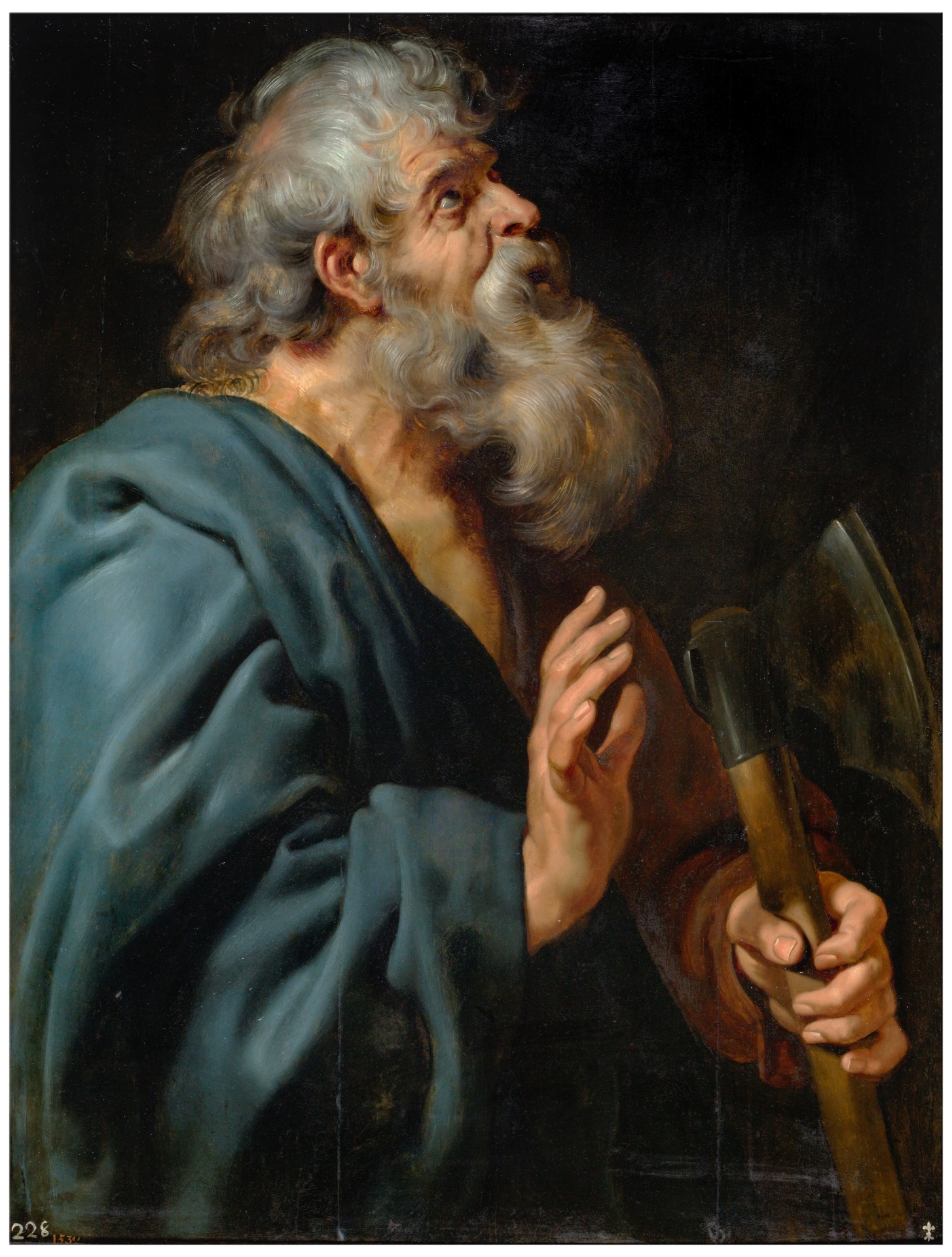
[00:00:00] Good morning, St. Paul Lutheran Church. This is Sunday drive to Church for January 18th, year of our Lord 2026. Oh, the confession of St. Peter today.
[00:00:10] Pastor Davis gave me some history about the dubious nature of having the confession of St. Peter in January instead of February.
[00:00:19] If you look into that, it's an interesting thing. It was apparently an anti Lutheran thing that the Pope said, hey, we got to have more Peter festivities.
[00:00:27] Because, you know, I'm the Pope and I've got Peter's office.
[00:00:32] I don't know. Our Lutheran response to that should be, look, you can't take Peter from us.
[00:00:38] Peter belongs to the church. In fact, 2 Peter. He talks about how we're fellow workers.
[00:00:45] Peter constantly refuses to be exalted above the other apostles, especially after Pentecost. Absolutely beautiful.
[00:00:54] Anyhow, here we have the colic for the day, and then we're going to get into the texts.
[00:00:59] Let's pray. Heavenly Father, you revealed to the Apostle Peter the blessed truth that your son Jesus is the Christ.
[00:01:08] Strengthen us by the proclamation of this truth, that we too may joyfully confess that there is salvation in no one else through the same Jesus Christ, our Lord, who lives and reigns with you and the Holy Spirit, one God, now and forever.
[00:01:22] Amen.
[00:01:24] It's interesting, the readings today. We have an Acts reading, 2 Peter and Mark 8. So we don't have an Old Testament. We have Psalm 118, which we'll talk about in a little bit. And the gradual is an interesting mixture. Two Corinthians, one Peter, Psalm 113, all melded together.
[00:01:43] The chief text is the Gospel lesson from Mark 8, where Jesus takes the disciples up to Caesarea Philippi. More on that later. Jesus asks, who do you say that I am? And Peter says, you're the Christ. That was reflected in that prayer. But the prayer also grabs a hold of this beautiful little thing from the Book of Acts, chapter four. We'll hear it.
[00:02:05] There's salvation in no one else. There's no other name under heaven given by which men must be saved. So this collection is. We may joyfully confess that there's salvation and no one else.
[00:02:16] It's really a kind of combo collect of the Mark 8 and the Acts 4 text. But before that, Psalm 118, we jump into right into the middle of the psalm. Well, maybe even towards the end. Remember this interesting thing, that Psalm 118 is the middle chapter of the Bible, and Psalm 117 is the shortest chapter, and Psalm 119 is the longest chapter.
[00:02:45] The middle verse is probably verse 8, Psalm 100, 18, 8. But verse 22 is the second most quoted old Testament passage in the New Testament, according to my count, which might be off, but I think the most quoted Old Testament passage in the New Testament is Leviticus 19. Love your neighbors yourself.
[00:03:10] The second is Psalm 118, verse 22. The stone that the builders rejected has become the cornerstone.
[00:03:19] This is the Lord's doing. It's marvelous in our eyes. And the reason it's quoted so many times is because Jesus loves to quote it two or three times. He'll quote it in the Gospels and then it gets repeated, Matthew, Mark, Luke. So I think it's six times already in the. In the Gospels. And then it's quoted by Peter and I think by Paul. And in 1 Corinthians, it's an explanation of the passion of our Lord. You have to imagine stonemasons building a fancy building. And they're bringing the stones over from the quarry and the guys are the builders are there picking the stones to put into the wall or into the foundation or into the fence or whatever.
[00:04:00] And there's a stone that's brought from the quarry and. And the builders look at that stone and they throw it out.
[00:04:07] We're not going to use it. But then someone else comes and takes it out of the trash heap where they throw all the useless stones.
[00:04:17] And not only do they use it to build another building, they use it as the cornerstone.
[00:04:25] The two most important stones in a building are the cornerstone and the capstone. So the cornerstone is going to sit at the edge of your foundation and it's going to determine and really all three directions you're up, and your wall this way and your wall that way. The cornerstone is going to be the level set, it's the foundation stone. And then the capstone is going to be that stone that's in the middle of the arch that holds the weight and keeps the roof from collapsing.
[00:04:53] But here Jesus is this stone that's rejected by the builders, the Pharisees, etc.
[00:04:59] And he becomes the cornerstone.
[00:05:01] The psalm says this is the Lord's doing. It's marvelous in our eyes.
[00:05:05] And then this is the day the Lord has made. Let us rejoice and be glad in it. And then save we pray, O Lord, O Lord, we pray. Give success that save we pray, O Lord is the Greek hosanna, sorry is the Hebrew hosanna, which translates saves Lord. So this is blessed is he, Blessed is He. Blessed is he who comes in the name of the Lord.
[00:05:31] That's the song that the children sang When Jesus was ascending down the Mount of Olives on the back of a donkey. And that's the song that we sing when we're getting ready to come up to the Lord's Supper. How beautiful. So we'll have that all in the last part of the psalm. For the entrance psalm, then we'll turn our attention to the readings, starting in Acts, chapter four. It goes to Jerusalem. Early on in the life of the church, Peter is filled with the Holy Spirit.
[00:06:01] They're arrested and brought into the rulers because they healed the man. Remember, they were walking into the temple, and there was a man begging. And Peter said, we don't have gold and silver, but what we do have, we give you in the name of Jesus. Stand up and walk.
[00:06:17] And he does. They heal the man. And the Pharisees are like, oh, we thought we were done with this problem, this Jesus problem.
[00:06:29] But nope, they still got their hands full. So they arrest Peter, they bring him in there, maybe with James or maybe with John and Peter, by the Holy Spirit, preaches rulers of the people and elders. If we're being examined today concerning a good deed done to a crippled man, by what means this man has been healed, Let it be known to all of you and to all the people of Israel.
[00:06:53] You got to imagine the Pharisees are like, shh, shh.
[00:06:56] That by the name of Jesus Christ of Nazareth, whom you crucified, whom God raised from the dead by him. This man is standing before you. Well, this Jesus is the stone that was rejected by you, the builders, which has become the cornerstone. And there is salvation in no one else. For there is no other name under heaven given among men by which we must be saved.
[00:07:21] Oh, man. Phenomenal.
[00:07:25] They ended up beating Peter and John, and they leave the Sanhedrin rejoicing that they had been counted worthy to suffer for the name of Jesus.
[00:07:36] It says as they noticed that now when they saw the boldness of Peter and John and perceived that they were uneducated common men, they were astonished, and they recognized they've been with Jesus.
[00:07:48] Now, this verse 12 is one of the key verses. There's salvation under no other name, no other name given under heaven by which we must be saved. That's part of what we call the exclusiveness of Christianity, that salvation belongs to Jesus and Jesus alone. There's no other way to be saved. He is God's plan of salvation.
[00:08:08] So it's saved by Jesus or not saved.
[00:08:12] Those are the only options. And that for us, is wonderful.
[00:08:16] But for the unbelieving world, it's horrible.
[00:08:19] And the reason why is because the world wants there to be lots of ways to be saved. Well, okay, I don't know if the world wants there to be lots of ways to be saved. The world wants to be saved in the way that they want to be saved.
[00:08:32] The unbelieving world wants to set its own terms for salvation. My best picture for this is if you have to imagine there's a huge city, there's a city protected by a huge wall. And you're outside, but you want to be inside because you can smell the barbecue.
[00:08:48] You're like, man, I want to be in there. And you're looking around the wall, and it's this impenetrable wall. It's just huge. You can't scale it. You can't climb over it. You can't go through it. It's this massive wall.
[00:08:59] But written on the wall, engraved in the wall, is a huge, big sign that says, enter here with an arrow pointing down to this little door.
[00:09:09] And you say, all right, we can get in.
[00:09:12] And everybody else says, well, but I don't want to go in that way. I want to go in right here. And they bang up against the wall where there's no door. Well, look, there is a door in.
[00:09:24] Just because it's not where you want it, the door is there.
[00:09:30] There is a name given under heaven by which we must be saved, which is already a miracle. I mean, the Lord shouldn't bother, really, but he does, because he loves us so much.
[00:09:41] No other name.
[00:09:42] There is salvation in no one else. For there's no other name under heaven given among men by which we must be saved. Must, must, must. That word must is going to come up in the words of Jesus in a little bit.
[00:09:56] All right. Gradual is this really unique liturgical combo of 2 Corinthians 4, verse 5, and verse 13, 1st Peter 4, 11, and Psalm 113, verse 3 goes like this. But we proclaim not ourselves, but Jesus Christ as Lord. That's from Paul.
[00:10:16] We also believe, and so we also speak as one who speaks the oracles of God. That's Peter.
[00:10:24] From the rising of the sun to its setting, the name of the Lord is to be praised. That's David or Whoever wrote Psalm 113.
[00:10:32] Beautiful. So this is the apostolic office of Peter, who's extolling and preaching and setting before the world our Lord Jesus Christ.
[00:10:41] The Epistle is from the pen of Peter. We'll remember that Peter, the uneducated man, but who was with Jesus, wrote two letters to the church, his first and Second Epistles. They're sometimes called the Catholic Epistles, starting with James.
[00:10:58] These are the Catholic epistles, the ones before. Well, Hebrews is a question. But the letters of Paul, remember, are named after who they're written to.
[00:11:07] So the Romans didn't write the book of Romans, they received it.
[00:11:11] And Timothy didn't write the book of Timothy, he received it from Paul. So those 13 or 14 books are from Paul.
[00:11:20] And then we have the Catholic Epistles that are named by who wrote them. So James wrote James, Peter wrote Peter, John wrote John, Jude wrote Jude, and so forth. I like to do this with the confirmands and say, who wrote Timothy? And they say, timothy. And I said, no, Paul. I said, who wrote Jude? And they said, paul? No Jude. Who wrote Titus? Titus? No, Paul.
[00:11:45] It's one of these things anyway. Catholic Epistle 2, Peter, the Second Epistle of St. Peter. And we have the first 15 verses, which are loaded up with stuff. I hope you have your pencil out for the reading of the Epistle, because there's a lot of things that you're going to want to mark.
[00:12:03] You'll want to notice how Peter describes himself, a servant, an apostle of Jesus Christ.
[00:12:09] You'll want to notice how Peter describes us to those obtaining a faith of equal standing with ours by the righteousness of God our Savior.
[00:12:18] His righteousness, not ours. You'll want to notice the greeting grace and peace. Remember, the Charis was the Greek greeting grace. And Shalom was the Hebrew greeting peace. And the apostles just have it, both Charis and Shalom, grace and peace be multiplied you in the knowledge of God and Jesus Christ our Lord.
[00:12:40] And then it gets into his divine power has granted to us all things that pertain to life and godliness through the knowledge of him who called us unto his glory and excellence. So notice the knowledge coming up. Knowledge in verse two, knowledge in verse three.
[00:12:54] And then it says, he has granted to us precious and very great promises.
[00:13:00] That will be another word to circle.
[00:13:03] God has given us promises, and those promises are for us to believe.
[00:13:10] And when we believe those promises, listen to what Peter says so that through them you may become partakers of the divine nature, having escaped from the corruption that is in the world because of sinful desires.
[00:13:28] Now that is an amazing passage.
[00:13:31] The Greek Orthodox love this because they spend a lot of time talking about theosis, about how we're being transformed, united to the divine nature and transformed into that divine nature. But here's what. What Peter says, sinful desires, that's lost or concupiscence, the wanting, the Wrong stuff is a corrupting factor in the world.
[00:13:54] So that this world is. Is falling apart. It's. It's corroding.
[00:14:01] So that there's a corrupt. There's a corrosive effect of concupiscence, of false desires. And it ends in death.
[00:14:09] But we've escaped this through faith. When we believe the promise that we're no longer bound up to the corrosion and corruption and death and sickness of this world.
[00:14:26] Now we still have the flesh which is corrupting our bodies and souls still. But we have the new man, which is alive by the promises of God. And so we participate in. In his life that never ends, in his glory which shines bright.
[00:14:43] All of these things that belong to his divine nature are also ours. His wisdom, his peace, his living forever.
[00:14:54] All of these are ours by faith.
[00:14:57] And then Peter says, because of this, because you have this eternal life through faith, you should supplement your faith with. And then he's going to list seven things. Virtue, knowledge, self control, steadfastness, godliness, brotherly affection and love. Here's the ladder of virtues. But I want you to note this too. That word supplement is twice in the text, but it's translated totally different in English. The first time is there in verse five. For this very reason, make every effort to supplement your faith with virtue.
[00:15:31] And the same word is Translated in verse 11. For in this way there will be richly provided for you an entrance into an eternal kingdom.
[00:15:42] The Greek word there is epi.
[00:15:44] I gotta look it up because I forgot it already.
[00:15:48] Oh, yes, it's the word choreography.
[00:15:53] It's like the old.
[00:15:55] In the old world, you have a patron who would provide for a whole chorus, like the stage productions and the singers and the costumes and everything else. He would be the choreographer. He would provide all the things for the chorus. And this is like epicorio. It's like an abundant provision.
[00:16:17] So it might be better to translate it. For this very reason. Make every effort to provide abundant provision with your faith of virtue and knowledge and self control and steadfastness and godliness and brotherly affection.
[00:16:33] That's the Philadelphia and love agape.
[00:16:36] If these are yours and increasing, they keep you from being ineffective and unfruitful in the knowledge of our Lord Jesus Christ. The idea here is that Peter says, look, you are living a different kind of life because you're going to live forever. Because you've escaped corruption, because you've believed God's promises and now you have things that God has. He's eternal and you're eternal.
[00:16:58] He's glorious. You're glorious. He's holy, you're holy. And so now you're living in this world in a totally different way, marked by these things. It's amazing.
[00:17:08] Then this way, brothers, be all the more diligent to make your calling and election sure.
[00:17:13] For if you practice these qualities, you never fall.
[00:17:17] I think this beautiful idea is that by faith in the promises of the gospel we're brought into this resurrected life of Jesus. And then Peter's going to say, and you ought to live like that. You ought not to live like everybody else who is bound up to the corruption of lust and sinful desires in the world.
[00:17:38] You should no longer live a corroding life.
[00:17:41] That's the easiest way to say it.
[00:17:44] You're not part of that. You're not part of the decay of the world.
[00:17:49] You're part of Christ.
[00:17:51] Yew.
[00:17:53] For in this way there will be richly provided for you an entrance into the eternal kingdom of our Lord and Savior, Jesus Christ.
[00:18:00] So good.
[00:18:02] So good. Then we get to Mark. Now, the confession of Peter, which we celebrate today is recorded in Matthew, Mark and Luke.
[00:18:12] It seems like the most expansive version of it is Matthew. And we normally lean on Matthew, but here we hear from Mark.
[00:18:20] And I don't know if this is why, but Mark is often considered Peter's gospel because Mark, you remember, was a companion of St. Paul. But then he got scared once I got over to Southern Turkey, and he went home. And then that was the occasion of Mark and Barnabas. Sorry, of Paul and Barnabas splitting up. Because when Barnabas and Paul are getting ready to go on the second missionary journey Mark, who's maybe a cousin of Barnabas wants to go again. Hey, I've grown up. I'll be fine this time. And Paul says no.
[00:18:51] And Barnabas won't let. He says, yeah, we should take him. Give him a second chance. And the dispute between Paul and Barnabas gets so intense that they split ways. And Paul goes with Silas and Barnabas goes with Mark. In fact, I think this is my own suspicion. But when you look at the map of the second missionary journey they decided Paul and Barnabas to go visit the churches where they'd gone before. So Barnabas, they had gone on this loop.
[00:19:18] And Barnabas goes the south way and Paul goes the north way. And when Paul gets to some of the cities they'd seen before instead of turning and going south he keeps going west and sort of north. And my suspicion is he doesn't want to run into Mark and Barnabas. Let's just go over here. And he Wants to get to Ephesus, but the Holy Spirit prevents him from going to Ephesus. Ends up in Troas. Third missionary journey takes him to Philippi, then down the track over to Corinth and Athens and all that stuff in Greece that doesn't necessarily matter. The point is that Mark ends up by the end of the book of Acts being a partner with Peter.
[00:19:58] And Mark is with Peter when Peter is in prison in Rome.
[00:20:03] And so just like Luke, the companion of Paul wrote his gospel, so Luke is sometimes called Paul's gospel. Matthew's, of course. Matthew, he was a disciple. John was John, he was a disciple.
[00:20:14] Mark was not a disciple, but he was a companion of Peter. So Mark is sometimes called the Gospel of Peter, not to be confused with the apocryphal Gospel of Peter. So I think the reason why we have Mark for this reason is because it's Peter's gospel. And I also think that Mark presents Peter in the worst light of all the gospels. Like a bunch of the big mistakes, like a bunch of the take out your left foot to put your right foot in your mouth kind of stuff happens in Mark because Peter's not trying to protect his own reputation, he's trying to extol Christ.
[00:20:52] So the text has a few different parts and I won't say too much about it because we're going to study it in the sermon. But Jesus takes his disciples way up north of Caesarea, Philippi. It's as far away from it's way north of Galilee. It's as far away as they go from anywhere. And they're out in the woods.
[00:21:07] And he says to the disciples, who do people say that I am?
[00:21:10] So he does a hey, what are people saying about me? And some say John the Baptist, others Elijah. So John the Baptist was dead, but so that'd be John the Baptist raised from the dead. Elijah, who is to come. Malachi 4, one of the prophets. That's probably the Deuteronomy 18 passage, I'll raise up a prophet like you. And he says, but what do you say?
[00:21:28] And Peter says, you're the Christ.
[00:21:31] In fact, in Matthew it says, son of the living God.
[00:21:35] And then in Matthew it says, blessed are you Simon, son of Jonah, for flesh and blood is not revealed this to you, but my Father who's in heaven. And I say, you are Peter, and on this rock I'll build my church, and the gates of hell will not prevail against it.
[00:21:51] And he strictly charges them to tell no one about him. And then verse 31, he began to teach them that the Son of Man must suffer.
[00:22:01] Remember I told you that must was going to come back. There's no other name under heaven by which we must be saved. Here the Son of Man must suffer.
[00:22:08] The necessity of his suffering is the necessity of our salvation. They're bound up together.
[00:22:14] He must suffer many things, be rejected by the elders and chief priests, by the scribes, and be killed. And three days rise again.
[00:22:21] And he said this plainly. And Peter takes him aside and begins to rebuke him.
[00:22:27] But turning and seeing the disciples, he rebuked Peter and said, get behind me, Satan, for you're not setting your mind on the things of God, but on the things of man.
[00:22:37] Peter had still this idea that the Messiah was going to be a ruler and set up his own kingdom. And so Jesus is changing their definition of what it means to be the Christ. It means to suffer, it means to die. And then it means to be raised.
[00:22:53] And then Jesus calls the crowd. This has to be an episode that happens later. They go and re engage with the followers that must have gone down south. And the crowd is there. And then Jesus says, look, if anyone would come after me, let him deny himself, take up his cross and follow me.
[00:23:09] For whoever wants to save his life will lose it.
[00:23:12] But whoever loses his life for my sake in the gospels will save it.
[00:23:18] And that certainly happened with Peter.
[00:23:20] He lost his life for the sake of the gospel. He was crucified upside down.
[00:23:25] He wasn't willing to die in the same horrific way that Jesus died, so he dies in an even more horrific way. Oh, the Romans had to be so happy about that. Peter says, I don't want to be crucified. Normally you crucify me upside down. And the soldiers would have been, oh, yeah, let's try that. They would try anything, these Romans.
[00:23:47] So Jesus is one of these.
[00:23:49] Jesus gives this great blessing that Peter is a partaker of.
[00:23:54] He loses his life for the sake of the gospel. Now this is also true for us. Now, not all of us will be martyred upside down.
[00:24:00] In fact, probably not even that many of us will be martyred. But we know that all that we have belongs to Jesus.
[00:24:09] Our lives, our names, our. Our wealth, our family, our future, our hopes, everything is in the hands of Jesus.
[00:24:21] We. We commend ourselves and our whole lives to him so that we're not living for ourselves, but for the one who gave Himself up for us and called us to be his own and to rejoice in. In his salvation. That's part of what it means to be partakers of the divine nature is that we're forsakers of the corrupt nature.
[00:24:43] And may God grant it through the Holy Spirit that we would leave those things behind which are leading to death and that bind us up to the fallen world and rejoice in all these great treasures that the Lord Jesus gives to us. We have it in the confession of Peter where he says, you're the Christian. And we say the same thing to Jesus is the Christ, the Savior, the Son of man. And we know that salvation belongs to us because he's put his name on us.
[00:25:11] All right, that's the confession of St. Peter Day. There's a bunch of announcements. I bet. I'm going to look in here. Oh, we're about ready to start a new catechism class. Adult catechism class. That'll be next week. So sign up with Pastor Smith or Pastor Davis. You can talk to me about that, too.
[00:25:27] That'll be. That'll be really great. We have our life magnified. Coming up, January 24th, which is Saturday morning. Pastor Cholak will be here from Our Savior Lutheran Church in Houston, Texas, to give a presentation. Pastor Smith is going to preach, and we'll go down and sing in March. That'll be a lot of fun.
[00:25:44] And one other thing I wanted to remind you of. What was that thing?
[00:25:51] Ah, here it is.
[00:25:52] We have our exploratory committee and our call committee both working. The exploratory committee is working on figuring out what's going to be helpful for staffing. The call committee is looking for names, and I think they met last week and decided that they were going to put a mid February deadline on names. So I think you got till February 18 to submit names to the call committee. You can send them to Elsa, and then they're going to be looking over all that info and presenting something to you. All the Lord's church. So that'll be great. Keep them in your prayers. All right. Sunday drive to church. God's peace be with you.